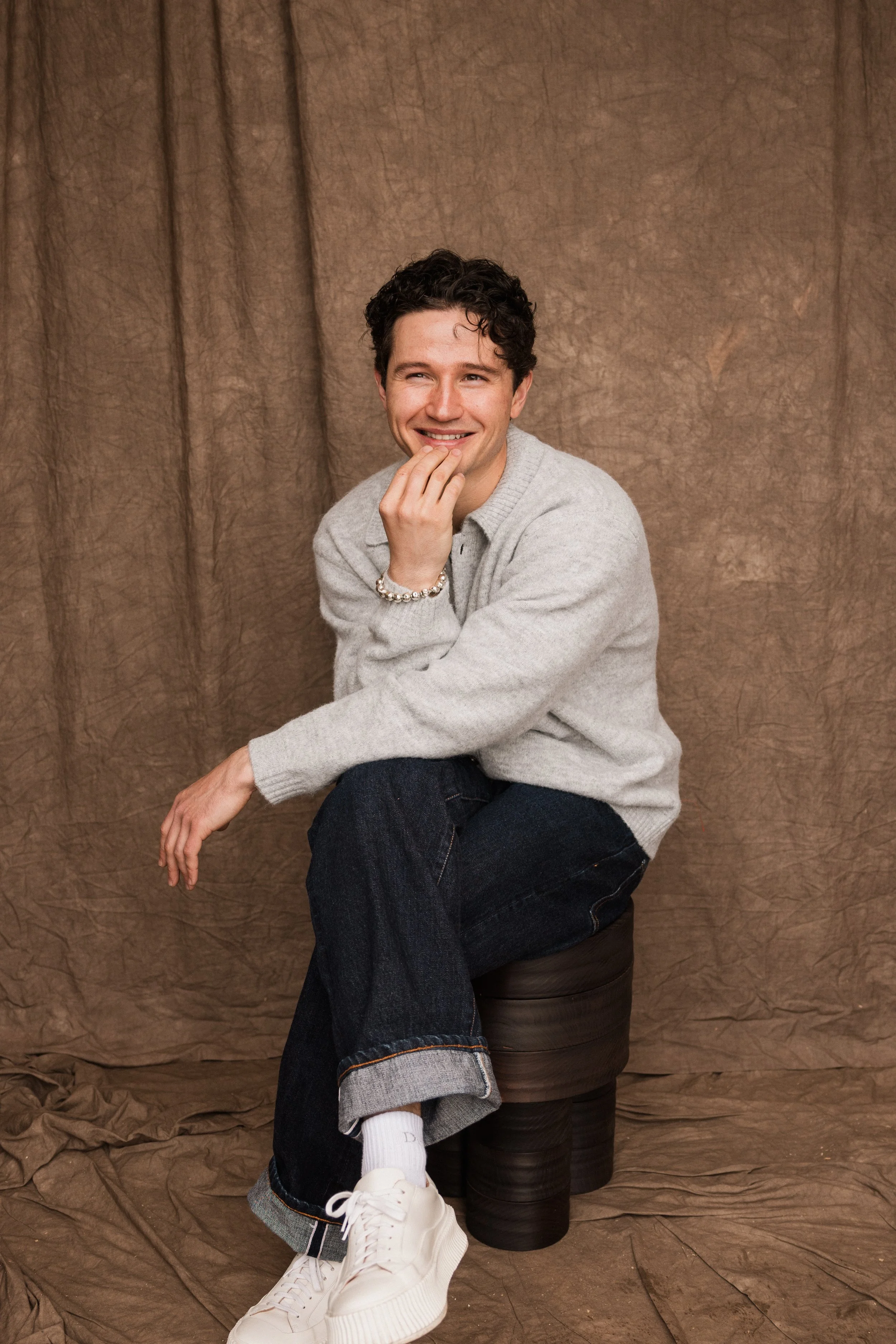
Marc Sweeney
There’s a certain quiet determination that follows Marc Sweeney, a Scottish product and furniture designer whose path into the industry has been anything but conventional. From the corridors of Glasgow School of Art to the fashion-focused classrooms of Istituto Marangoni in London, his journey is one of exploration, defiance, and a return to his roots — quite literally, back to his family’s workshop on the banks of Loch Lomond.



“I was actually the first intake in London for product design,” he recalls of his time at Marangoni. “They just ran the course anyway. I loved it because you got so much attention. The tutors all worked part time — they were actual designers in the industry. And when you leave that school, they’ll make sure your name is in the right places.”

But long before London, it was Glasgow School of Art that changed his relationship with creativity. “The high school I went to was
terrible — it was an absolute shithole” he admits bluntly. “The earliest catalyst was actually going to the Glasgow School of Art. It
was a total change of space — the building, the furniture inside, even the smell when you walked in. It changed my respect for
myself.
”
For years, cinema seemed to hold his future — he wanted to be a filmmaker. But film, as he discovered, demanded a community.
“Everyone kept saying, ‘You should be making furniture.’ Eventually, I enrolled at Marangoni. Other design courses focused too
much on industrial design, but I wanted the emotional side. Fashion has always been an influence for me.”

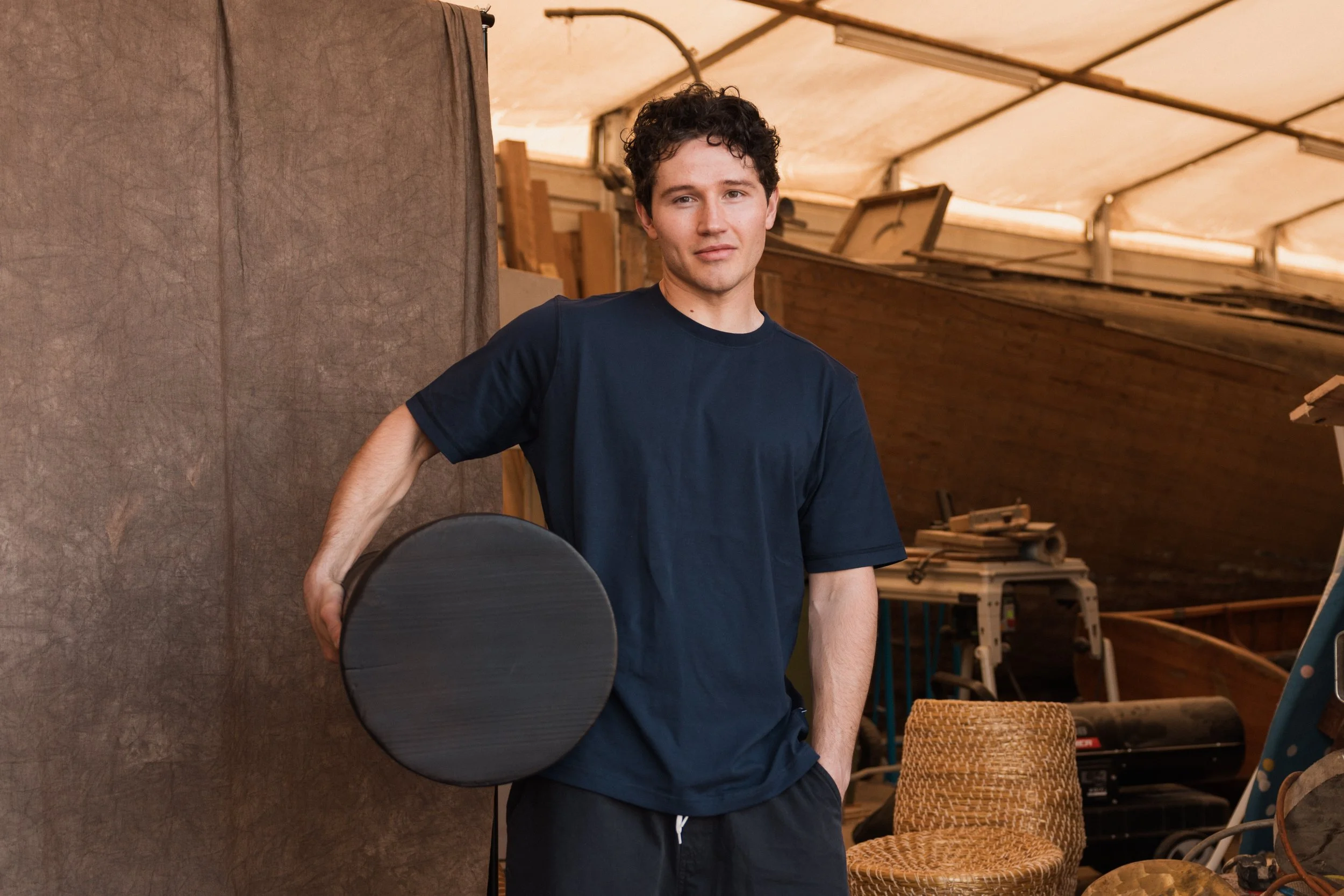
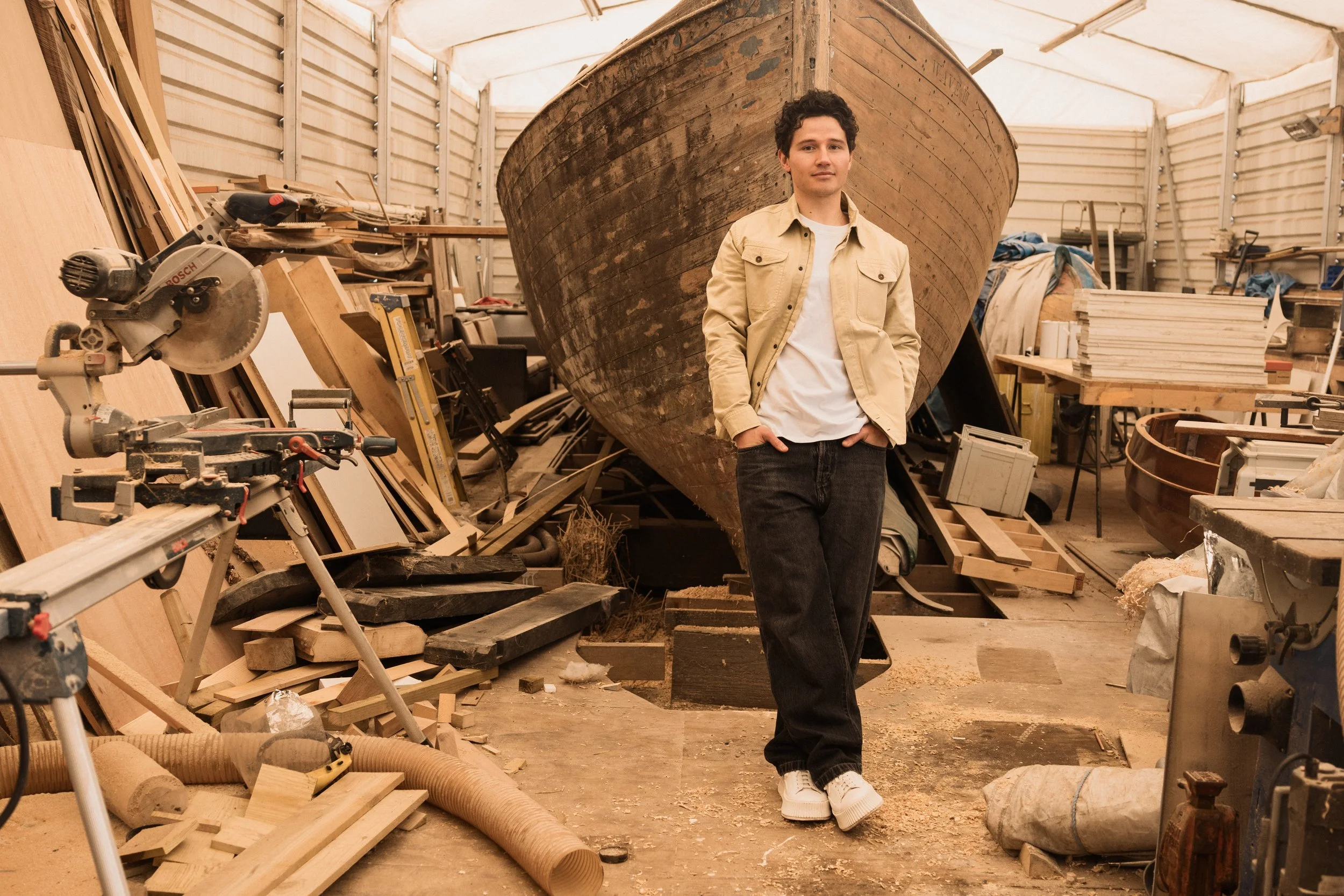
Today, back in Scotland, he builds from a rare vantage point: access to his father’s workshop, machinery, and boat-building
heritage. “As a young designer, that doesn’t exist in London. Here, I can make everything myself. I’m just super lucky.”



Perfection, however, comes only with persistence. “It’s difficult,” he admits when asked how he maintains quality across his work. “The only way is to really understand your material. That confidence takes a lot of fuck-ups. To get to the point where every single time I cast one of these things it works out — that’s been almost two years, hundreds and hundreds of attempts.” Failures, in his eyes, aren’t setbacks but secret wins. “Every single failure is your ability to download information. You do it slightly differently next time. It’s not a failure at all.”

Unlike designers who begin with sketches or digital models, Sweeney’s method is physical, tactile. “The catalyst is always finding
material I want to work with. Making is a way of sketching,” he explains. Only after understanding the material’s limits does he
re turn to the computer.
The balance between sculpture and function remains a constant tug of war. “I love making stools,” he smiles. “They’re not just
stools — they’re a perfect balance of form and function. A chair is just a chair. But a stool can be anything.”

Trends, he feels, move slower in design than in fashion. His focus isn’t on chasing material fads but on cultivating longevity. “The
most sustainable object on planet earth is an heirloom,” he says. “Whether it’s your grandmother’s wardrobe or a piece someone
cherishes for decades — that’s sustainability.
”
As for heritage, he acknowledges the duality. Though trained in traditional woodwork, he often pushes against it. “I’ll use modern
wooden pieces a carpenter would never touch. I love that. It’s almost rebellious.”

When asked what advice he’d give to aspiring designers, Sweeney’s response is characteristically raw. “Anything anyone’s ever
told you about failure is bullshit. Failures are the secret wins. Stay in the room, work things out. It’ll astound you how quickly you
can learn if you just stick with it.
”
Looking ahead, his ambitions stretch beyond one-off pieces. “High production is my next focus. It’s an untouched realm between
one-off furniture and mass production. It could democratise what is usually really expensive.”
And the dream? Collaborating with fashion brands on store design. “You can be a lot more theatrical with store spaces. It would
complement my work perfectly.”

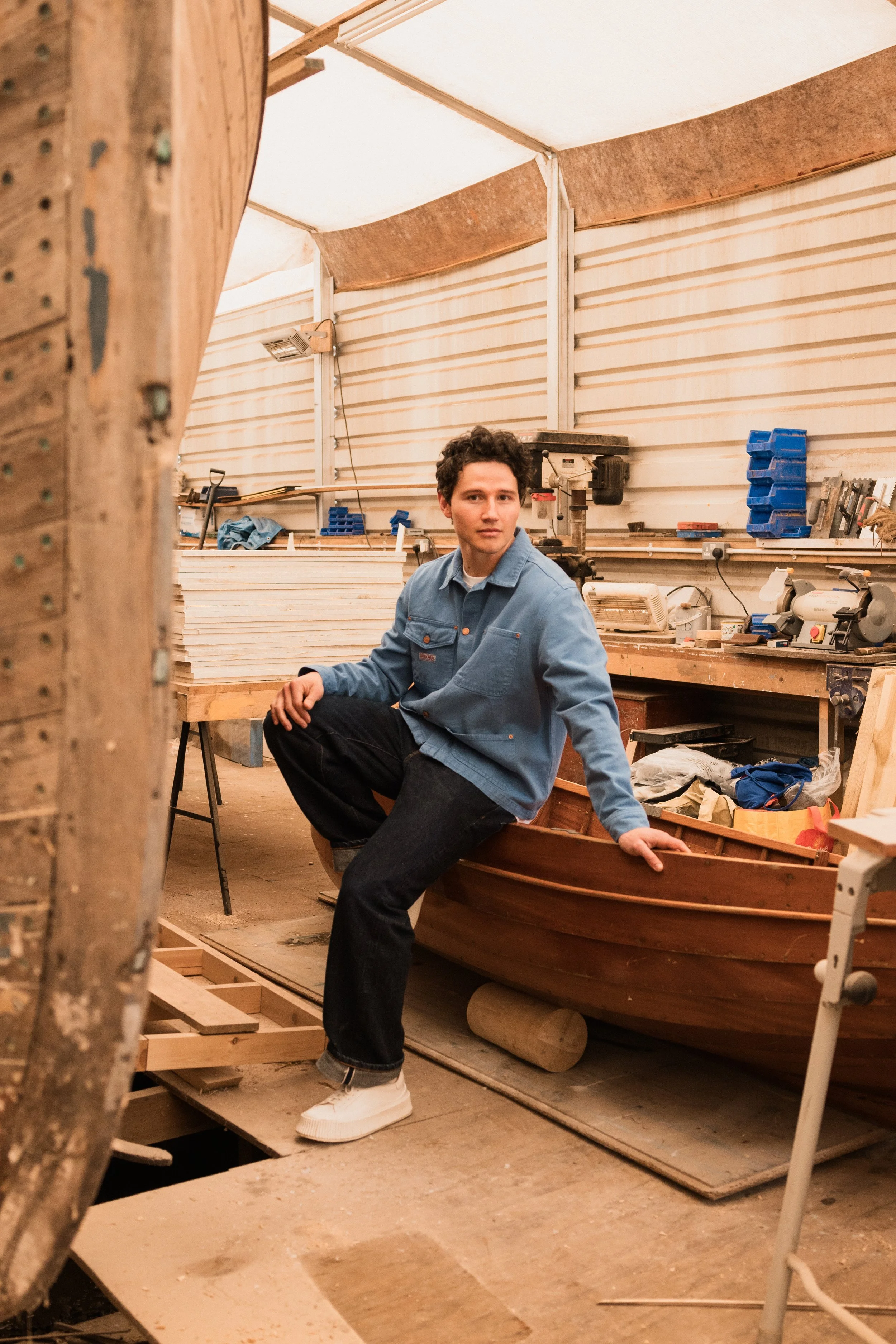

There’s a quiet power in the way he speaks of making, of failure, of heritage and rebellion. Marc Sweeney is not simply shaping furniture, but carving out a philosophy: one where honesty, imperfection, and stubborn persistence become design’s truest materials.